
“Creativity is rebellion with a bow on it.”
Full stop. No bows needed here; this isn’t a neatly wrapped gift or an elegant display of affection. This is a battle cry.
Self-consciousness is the foundation of the human condition. Our species is unique in its ability to connect the past, present, and future individually and collectively. We process our experiences through personal reflection, daily innovation, and critical thinking.
There is nothing more real than the internalized aloneness of an individual who is simultaneously existing within the collective whole of an entire universe. Each of us develops a distinct perspective and narrative. And our stories can only be told through our own lens.
When we produce art and choose to share it with others, that act of vulnerability is what connects us to our truest selves. This is why it’s so rewarding for artists to have their work resonate with an audience. It’s confirmation that we are not alone, even when our view of the world is formulated solely within ourselves.
Our journey on Earth is oftentimes messy and filled with struggle. But it’s also equally extraordinary and full of mirth. We get to feel it all. And artists translate that into something tangible through a filter only they possess, hoping that someone else feels it, too. Sincerity is at the core of the creative spirit.
Artificial intelligence can never compete with that kind of magic. It has no depth, no soul. It can be useful for a grammatical review or maybe some brainstorming, but it’s also adept at turning brains into soup.
It’s not even the good soup that wraps its arms around you on a chilly fall night and tickles the senses with nostalgia. No, instead it’s like an expired can of off-brand mush that should be chucked right into the trash with the rest of the garbage.
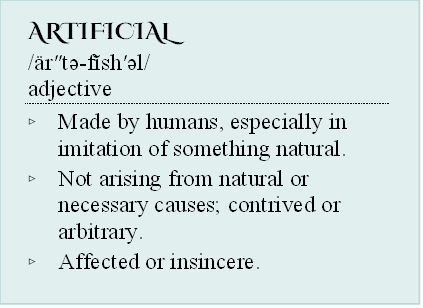
Engaging in the act of creativity is a rebellion against a contrived consciousness. It is a middle finger to the water-gulping bot that only exists on a server in a cold room somewhere, stealing greatness from the hivemind of humanity to generate mediocre rubbish. Outsourcing the creative process is an abomination of everything that makes us exceptional.

The implications for our environmental resources are horrifying. The brain rot that is already occurring is the stuff of dystopian nightmares. The impending crash of the job market is looming, with pieces already unraveling, leaving folks with no means to support themselves. Yet it is a seemingly inevitable reality.
There are things we cannot escape.
When ChatGPT was first introduced, I had no interest. As those around me started using it more, I decided to try it for research and brainstorming. I even tested its ability to generate graphics. I’m not saying that it can’t serve a purpose, but I do believe it is a net negative given the gravity of the damage it’s capable of.
AI has been slowly woven into the fabric of our lives over the years. A little autocorrect here, some GPS over there. Do you remember the Microsoft Word paperclip? Now we have Copilot that can’t even be turned off.
We may not be able to fully escape it, but we can certainly choose to limit our use where it’s not being forced down our throats. And anyone calling themselves an artist has an ethical duty to produce their art themselves. Doing anything else is vulgar.
Full disclosure serves the purpose of sincerity.
I have been writing for over 30 years. I would be offended if accused of using AI to generate my work. I’m not worried about it taking over creative arts so much as I’m concerned with it harvesting brilliance to produce slop. Or conditioning people to accept slop as the norm.
As a past experiment, I asked it to review some of my writing. After stroking my ego as it’s designed to do, it proceeded to suggest revisions that ignored the integrity of whatever it was given. I regret that I participated in feeding the beast, but I’m thankful that I saw some of its weak spots.
I use Picsart for my graphic editing.
It’s a paid subscription with some AI-backed features that I didn’t even realize were baked in. Removing an image background, for instance, is something I’ve been using for over a decade to create transparent, web-friendly .png visuals.
Much like other editing tools (i.e., Canva), Picsart has a library of publicly shared images that you’re able to access for your own projects. I can’t be certain of their origin, as these are user-created stickers offered in a gallery with no source information. I’ve incorporated these on occasion.
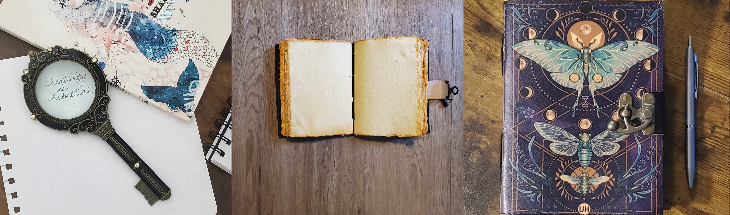
Many of my images are composed of edited photos of my own belongings. The standard post image is a blank page from my favorite journal, and the magnifying glass – I’ve had that for eons. Below are some of the unedited pictures straight from my Android phone.
I think the best we can do right now is offer transparency in our work and aim to avoid overusing AI in general. Authenticity is paramount. I’ve always said that creativity is rebellion, but the context has changed. It used to mean that originality was the defiance of conformity. And while that still holds firm, it’s evolving to include the resistance to the degradation of sincerity.
I originally made this as a page linked from my about tab. I decided to post it, so comments are open for discussion. I didn’t realize pages don’t allow interaction.
Leave a Reply
You must be logged in to post a comment.